
Open source networking across your infrastructure
One foundation, from hardware to applications
Streamline and simplify networking at scale by building and operating your infrastructure on Ubuntu. Canonical delivers enterprise-grade open source networking across the full stack.

A selection of our partners



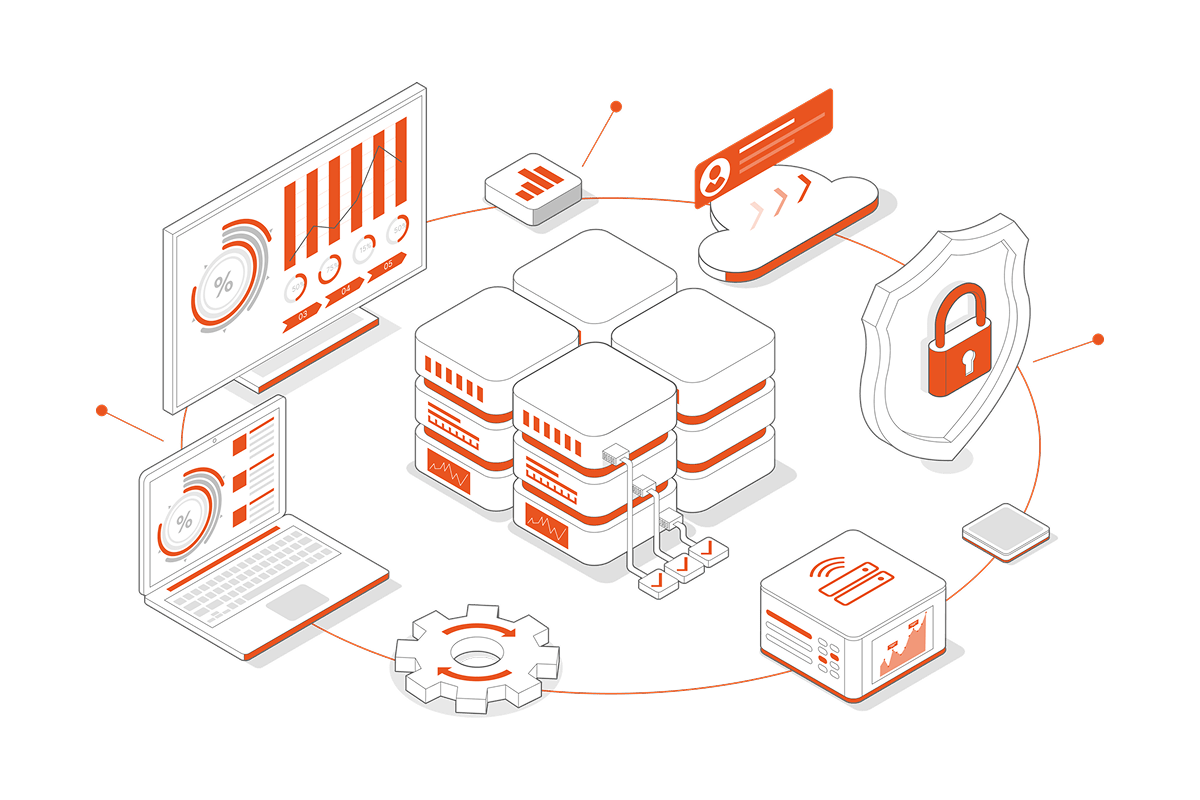
Networking: supported from hardware to applications
Network products
Build network operating systems (NOSs) and software appliances on Ubuntu Server, or create immutable network devices with Ubuntu Core. Canonical provides kernel maintenance, security updates, hardware enablement, and a predictable lifecycle for embedded Ubuntu-based products.
Hardware and acceleration
Canonical works with system and silicon partners to enable supported Ethernet Network Interface Controllers (NICs), InfiniBand Host Channel Adaptors (HCAs), SmartNICs, and Data Processing Units (DPUs) on Ubuntu. Features such as Single Root I/O Virtualization (SR-IOV), Remote Direct Memory Access (RDMA), and offload depend on the validated hardware, firmware, driver, and release combination.
Bare metal and cloud
MAAS provisions servers and their host networking. Our open source cloud platforms, Canonical OpenStack and MicroCloud, add virtual networking for private cloud, integrating with physical fabrics and the network management platforms operators choose.
Kubernetes
Canonical Kubernetes connects pods and services, applies network policy, and exposes workloads across bare metal and virtual environments. Infrastructure teams retain control of the underlay and external connectivity.
Applications
Charms express how applications need to connect, including ports, relations, exposure and service endpoints. Juju uses this model to automate application deployment, integration, upgrades and day-two operations across supported infrastructure.
Open networking capabilities on Ubuntu
Build with established open source networking projects on Ubuntu's maintained Linux foundation. Canonical brings a predictable release lifecycle, security maintenance, and enterprise support options to help teams operate network infrastructure with confidence.

Virtual networking
Open vSwitch (OVS) and Open Virtual Network (OVN) provide programmable switching, logical networks, routing, and policy for virtualized infrastructure, including Canonical OpenStack and MicroCloud.

Open routing
FRRouting (FRR) and BIRD provide open routing protocols and policy for Linux hosts, cloud infrastructure, and connections to wider routed networks.

Accelerated data paths
Use DPDK, XDP, and AF_XDP for fast software data paths, or accelerate virtual switching, routing, and security through SR-IOV and hardware offload on supported NICs, SmartNICs, and DPUs.

Host networking and policy
Configure resilient host connectivity and apply policy close to workloads. Ubuntu supports interface and link management, segmentation, firewalling and encryption, alongside RDMA for low-latency, high-throughput data movement.
Support security for the long term
Ubuntu Long Term Support (LTS) releases provide a predictable base for infrastructure lifecycles. Ubuntu Pro expands security maintenance across the Ubuntu archive for 10 years, and adds services such as Kernel Livepatch and hardening or compliance tooling for supported configurations. With the Legacy add-on, this is extended an additional 5 years, giving you a 15 year security maintenance and support commitment.
Canonical support gives infrastructure and product teams direct access to enterprise expertise across Ubuntu and Canonical software. Canonical can also help OEMs, silicon vendors, and network software providers enable, support, and maintain Ubuntu-based products throughout their commercial lifecycle.
Latest networking insights
Blog articles
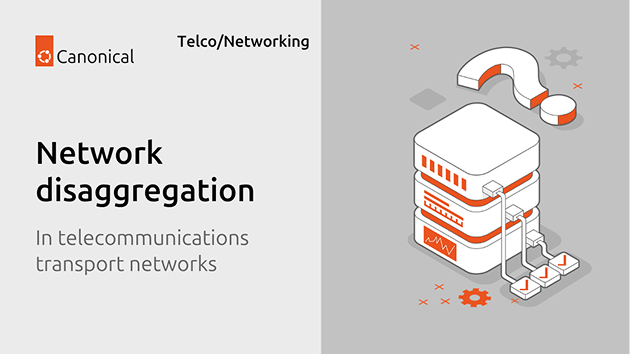
Learn how network disaggregation separates hardware from network software, giving operators greater choice and control. This article explores the model, its benefits, and the practical considerations for building open, flexible networks.

Discover how telecom operators can build scalable AI infrastructure with open source software, accelerated computing and high-performance networking. This whitepaper explores the architectural and operational choices behind supported, reliable AI platforms.

Learn how RDMA over Converged Ethernet (RoCE) enables direct, low-latency data transfer across Ethernet networks. This article explains how it works and what it brings to demanding AI, High-Performance Computing (HPC), and storage workloads.

Explore how InfiniBand delivers high-throughput, low-latency connectivity for demanding computing environments. This article introduces its architecture, key capabilities, and role in AI and HPC clusters.
Knowledge hub

Learn how cloud networking connects applications, users, and data across public, private, and hybrid clouds. This introductory guide explains the core concepts, technologies, benefits, and how they fit together.

Discover how SONiC separates network software from hardware to give operators greater choice, consistency, and control. This introductory guide explains its architecture, ecosystem, and role in modern data centre networks.
Build your infrastructure on an open networking foundation
Discuss your networking requirements with Canonical. We work with enterprises, cloud providers, telcos, OEMs, network software vendors, and silicon partners on Ubuntu-based infrastructure, hardware enablement, automation, security maintenance, and support.